What is warehouse floor striping and why does it matter?
Warehouse floor striping uses durable paint, epoxy, or industrial floor tape to create clear safety markings that guide traffic, define storage and staging zones, and improve workflow. Proper floor lines enhance safety, improve organization, and help meet OSHA expectations for clearly marked aisles and passageways.
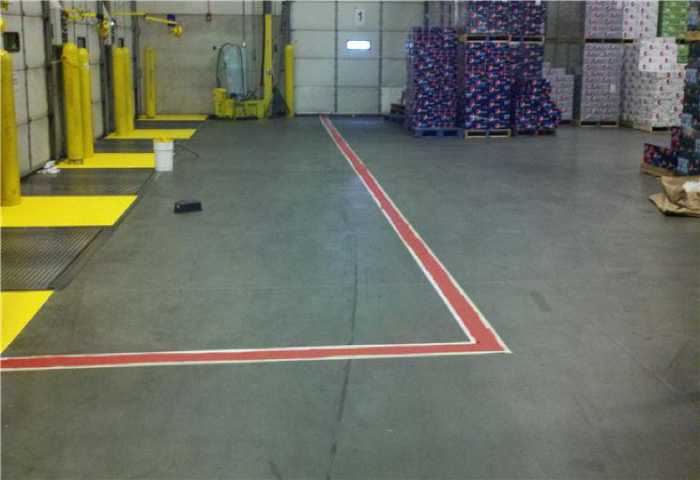
OSHA requires that permanent aisles and passageways be clearly defined but does not specify exact colors. Most facilities follow ANSI and industry standards, using yellow for caution or aisles and red for fire equipment zones, ensuring warehouse safety markings are consistent and easy to understand.
A standard warehouse layout includes forklift lanes, pedestrian walkways, crosswalks, loading zones, rack face lines, pallet positions, work cells, and staging areas. We can provide a detailed floor plan or digital map so your team has a clear guide for daily operations, picking, and storage.
The right material depends on your traffic level, environment, and budget. Fast-dry paint works well for light to medium traffic. Two-part epoxy or urethane coatings provide maximum durability for heavy industrial areas. High-quality floor tape is ideal for 5S and Lean layouts where flexibility and quick layout changes are important.
How wide should lines be and how are crossings handled?
Most warehouse aisles use 2- to 4-inch lines, with wider markings for heavy traffic lanes or pedestrian areas. Crosswalks typically use zebra or ladder-style patterns for maximum visibility. We can also apply arrows, floor symbols, and hazard markings to improve navigation and safety.
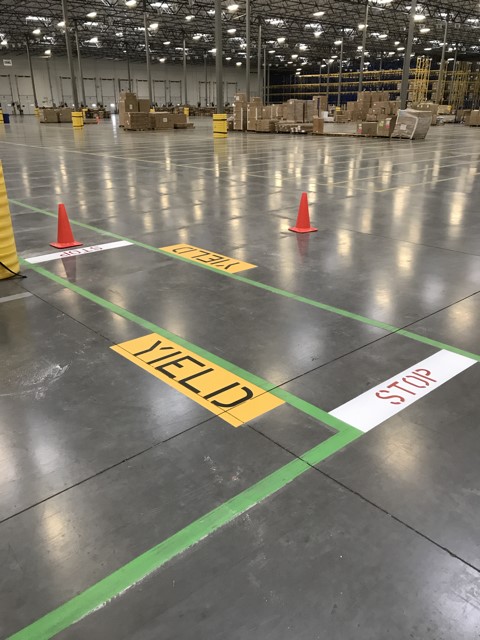
Yes. We use professional stencils and floor decals for messages such as “KEEP CLEAR,” “STOP,” “FORKLIFT,” and numbered storage zones. Custom floor graphics can include hazard hatching, directional arrows, or identification areas to support visual management and improve communication.
How long does striping take and when can we drive on it?
Most projects are completed in phases to keep operations running smoothly. Fast-dry coatings are typically ready for light traffic within a few hours, while high-build epoxy systems may require 24 to 48 hours depending on temperature and ventilation. We schedule work around your production needs to minimize downtime.
Do you offer help with 5S, Lean, and staging zones?
Yes. We design and install floor striping systems that support 5S and Lean principles, including FIFO lanes, color-coded markings, labeled staging areas, and visual floor signs that promote organization, safety, and efficiency.
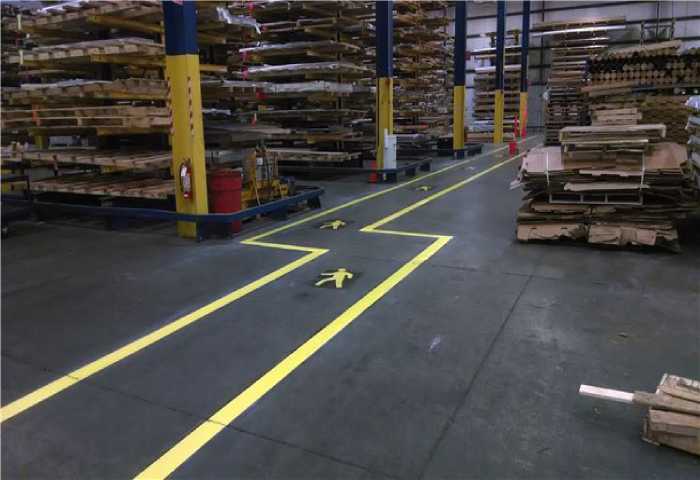
Absolutely. Dedicated pedestrian walkways, crosswalks, stop bars, and brightly colored markings help separate foot traffic from vehicles. These visual cues reduce accident risk and support OSHA’s goal of creating safer, more organized warehouse traffic flow.
How do you handle high-wear or cold areas?
We use materials specifically engineered for durability under heavy wear, moisture, temperature fluctuations, and tire friction. Proper surface preparation is critical to ensure strong adhesion and long-lasting results, even in freezers or high-traffic loading dock zones.
What maintenance is required?
Regular inspection, cleaning, and touch-ups keep markings visible and compliant. We offer maintenance plans that include re-striping, layout adjustments, and seasonal updates to maintain clarity, accuracy, and long-term performance.
Can you assist with compliance and documentation?
Yes. We ensure every floor layout meets OSHA and industry standards for clearly marked aisles and safety zones. After completion, we can provide digital layout files or blueprints for staff training, safety audits, and future updates.