What is directional signage and why does it matter?
Directional signage, also called wayfinding signage, helps drivers and pedestrians navigate safely with clear arrows, lane cues, and location markers. In parking areas, it works alongside parking lot signs, traffic signs, and pavement markings to guide people to entrances, exits, and buildings without confusion.
Typical signs include entry and exit signs, navigation arrows, lane choice signs, speed limit and stop signs, directional arrows, building directories, and wayfinding signs for both exterior and interior areas. Many properties also use pedestrian crossing signs, exit markers, and labeled spaces for visitors, deliveries, or tenants.
Yes. Accessible wayfinding must align with ADA requirements, including clearly marked accessible routes, van-accessible spaces, and compliant lettering and symbols on signage. While regulatory ADA signs differ from custom directional signage, both should work together as part of a unified system.
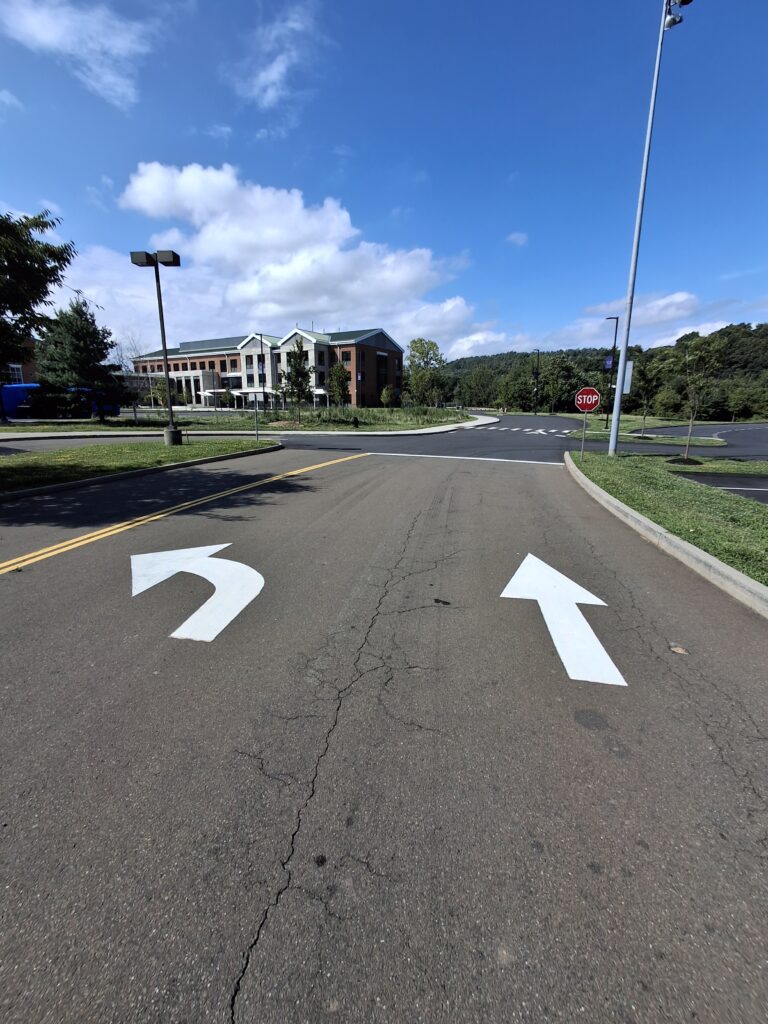
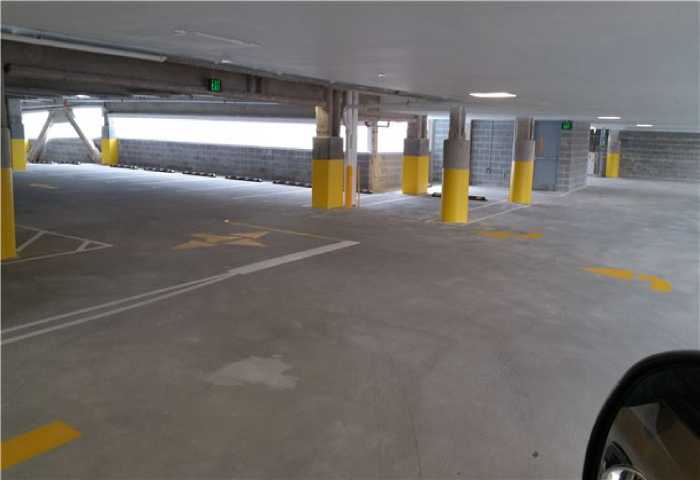
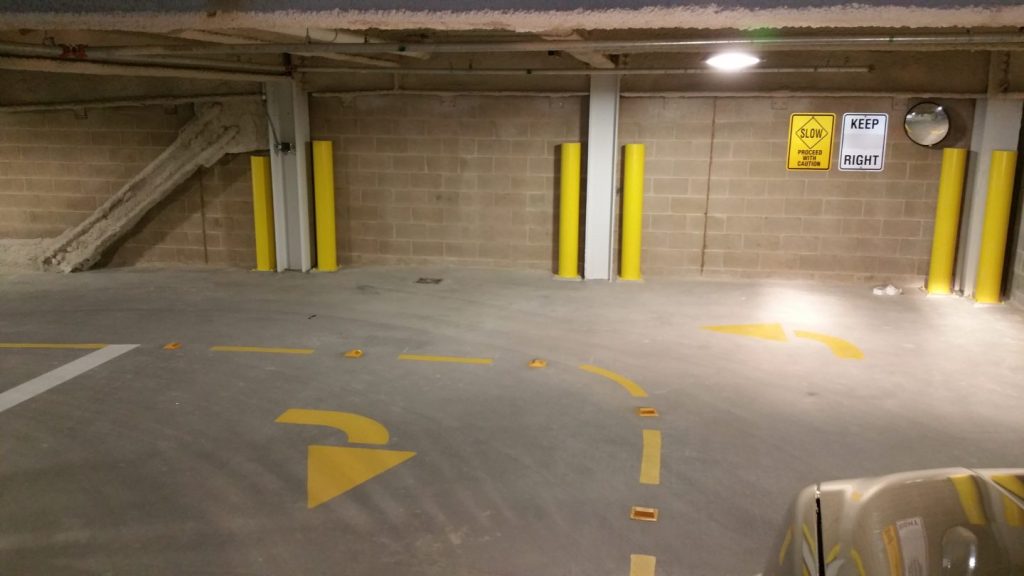
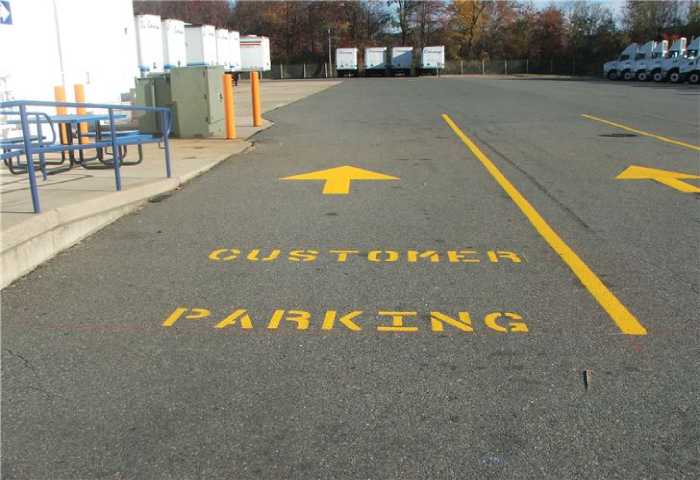
Effective wayfinding combines mounted signs with pavement markings such as arrows, words, and symbols. This layered approach improves visibility in all lighting conditions and helps prevent sudden lane changes or traffic confusion.
Most exterior signs are made from durable aluminum panels with reflective sheeting for nighttime visibility. Posts are usually galvanized or powder-coated steel for strength and weather resistance. For indoor areas, lightweight wall-mounted or ceiling-hung panels are often used.
On public roads, the MUTCD requires traffic signs to be retroreflective. On private property, reflective directional signage is highly recommended for safety and consistency. Illumination is optional but helpful in low-light or enclosed areas.
Yes. We begin with a site walkthrough and traffic flow assessment, then create a layout map that identifies key decision points. After that, we finalize text, arrows, and placement for all wayfinding, parking lot, and directional signs. We Do Lines can manage the entire process, including design, fabrication, installation, and layout coordination.
What’s the difference between regulatory and directional signs?
Regulatory signs, such as stop, yield, and speed limit signs, communicate required actions and must follow strict standards. Directional signs guide users toward destinations like entrances, exits, or lobbies. Most properties need both types, along with safety signage for mixed vehicle and pedestrian areas.
How long does installation take and is there downtime?
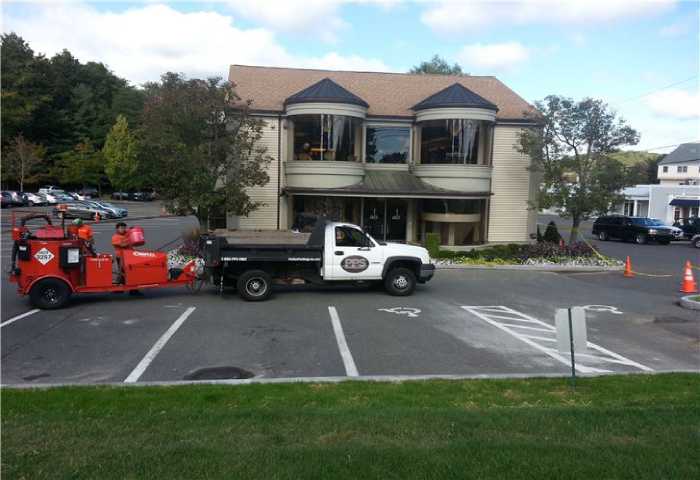
Smaller installations with only a few signs can usually be completed in a few hours. Larger campuses that require multiple directional signs may take a full day or more. We schedule work to minimize disruption and coordinate with any pavement marking or striping projects.
Do you provide maintenance or replacements?
Yes. We maintain and repair existing signage by tightening hardware, replacing faded faces, straightening posts, and updating layouts when traffic patterns change. Regular maintenance helps ensure consistency and clear navigation across your property.
Do you also supply traffic control devices and property signage?
Yes. We supply traffic control signs, regulatory signs, and branded property signage so that all site elements align with safety and design standards.
Can I get custom branding on directional signs?
Yes. We can include your logo, brand colors, and typography while maintaining strong visibility and readability. For outdoor signage, we ensure your branding complements safety and reflectivity requirements.