Absolutely. Crisp, bright lines make your property look well-maintained and professional, which is attractive to visitors and customers.
A complete parking lot striping service typically includes layout design, line painting, ADA-compliant accessible spaces, fire lanes, loading zones, directional arrows, and pavement symbols applied with professional stencils. Crews also handle curb and speed bump touch-ups when needed. All work is performed with traffic-grade coatings and precision equipment to ensure crisp, durable markings.
Do you follow official striping standards and regulations?
Yes. Every layout is designed to meet ADA requirements for accessible parking and follows MUTCD-informed striping standards along with local regulations, including fire lane widths and signage codes. We confirm compliance with all applicable guidelines before work begins.
We design layouts that balance safety, traffic flow, and efficiency. Each plan maximizes stall count while maintaining proper turning space, pedestrian access, and ADA routes. When comparing contractors, request a scaled parking lot plan before painting begins to ensure accuracy.
Most parking lots use professional-grade water-borne acrylic paint that dries quickly and is easy to maintain. In high-traffic or specialty areas, we may use pre-formed thermoplastic or striping tape for added durability and reflectivity. Thermoplastic is more common on public roadways than in private parking lots.
What is the difference between line striping and marking?
Line striping refers to the painted stall lines, while marking includes all other pavement graphics such as arrows, stop bars, crosswalks, numbers, and ADA icons. These are applied using precise stencils and measurements to meet specifications.
How long does striping take to dry and when can cars return?
Under normal dry conditions, most traffic-grade acrylic paints are tack-free within 15 to 30 minutes and ready for light traffic in about one hour. Full curing may take longer depending on temperature and humidity. Work is planned in phases to minimize disruption to your property.
Most parking lots benefit from restriping every 12 to 24 months, depending on traffic, weather, and wear. High-traffic or retail properties often repaint annually to maintain visibility, safety, and ADA compliance.
Can you repair cracks and potholes before painting?
Yes. For lasting results, we make sure the surface is properly prepared. Our team provides crack sealing, pothole patching, and curb repairs so the asphalt is in good condition before new striping is applied.
Pricing depends on several factors, including total linear footage, number of symbols, layout complexity, and material type. Smaller projects may be priced per stall or linear foot, while larger commercial sites are often quoted per square foot. Every proposal includes a clear, itemized breakdown.
Do you stripe both small properties and large commercial sites?
Yes. We service small business parking lots, resurfacing projects, and large commercial campuses. Work can be scheduled during off-hours or weekends to minimize disruption and maintain site accessibility.
What about equipment and safety on-site?
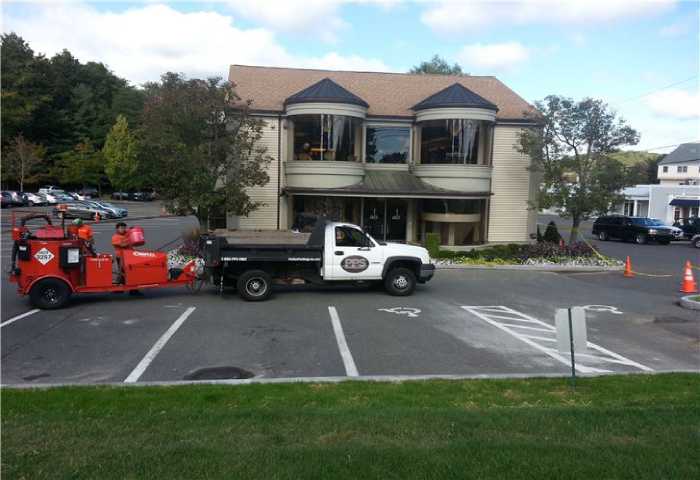
Crews use professional striping machines, cones, and signage to ensure safety and maintain access during work. Zones are clearly marked to protect fresh paint while keeping ADA routes and deliveries open.
Can you match existing colors and symbols?
Yes. We can restore faded markings, match existing colors, and update symbols or numbering while ensuring compliance with current standards.
You can schedule a site visit for a free assessment and detailed plan. We will measure your property, review compliance requirements, and provide an accurate written estimate for your parking lot striping project.