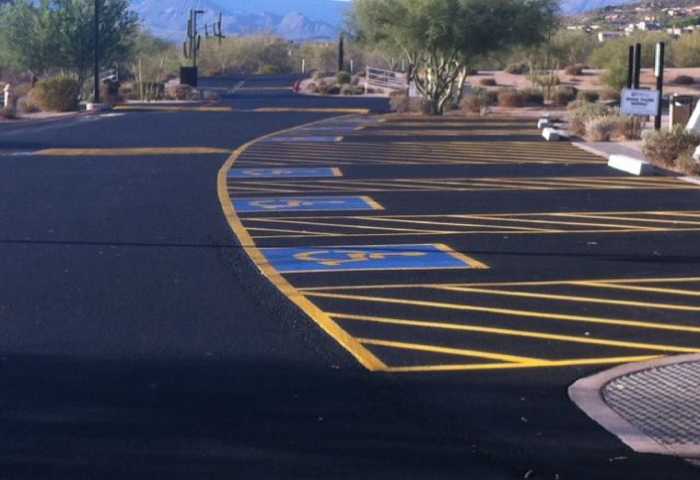
ADA-compliant striping includes pavement markings, line painting, signage, and parking layout design that meet federal accessibility standards. This includes correctly sized accessible spaces, clearly marked access aisles, compliant signage, and accessible routes connecting parking areas to building entrances.
How wide should accessible and van-accessible spaces be?
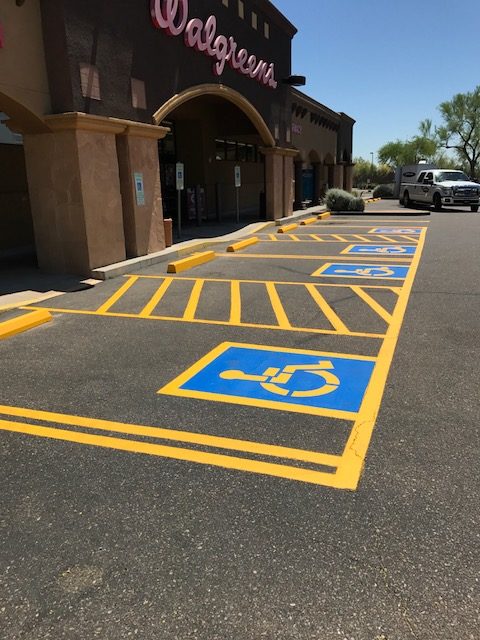
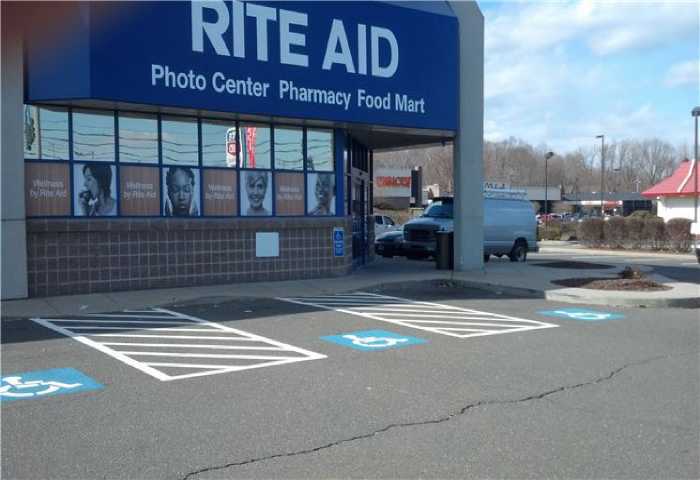
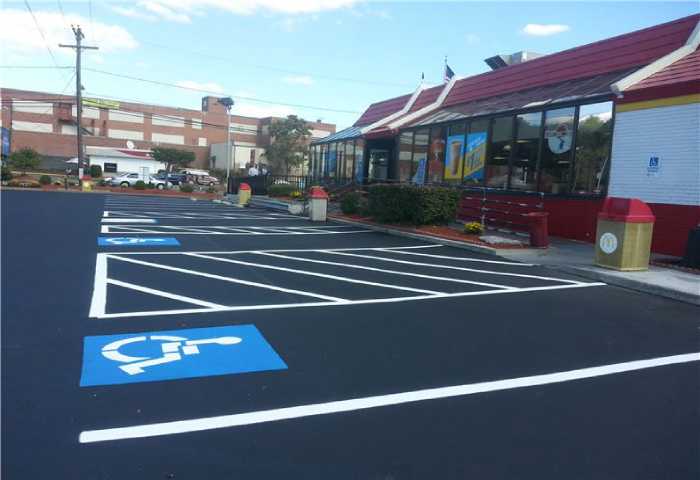
Standard accessible spaces are typically 8 feet (96 inches) wide with a 5-foot (60-inch) access aisle. Van-accessible spaces must be either 11 feet (132 inches) with a 5-foot aisle or 8 feet (96 inches) with an 8-foot aisle. Access aisles must be striped to discourage parking and maintain a maximum slope of 1:48 in any direction.
The ADA requires a minimum number of accessible spaces based on the total parking count, as listed in federal tables. At least one of every six accessible spaces must be van-accessible. Local jurisdictions may have additional requirements, so we verify both ADA and local regulations before beginning striping.
Accessible spaces must be located on the shortest accessible route to an accessible entrance. If a facility has multiple entrances, accessible spaces should be distributed to provide convenient access to each one.
Each accessible parking space must display an upright sign with the International Symbol of Accessibility. Van-accessible spaces also require a “Van Accessible” sign. We provide and install all ADA-compliant signs, including handicap parking and directional signage, as part of a complete striping service.
Do curb and paint colors have to be blue?
The ADA does not mandate specific paint colors; these are determined by state or local codes. Most areas use blue for accessible stalls and hatch marks, and red or yellow for fire lanes and no-parking zones. We always follow local requirements for color selection and application.
What stencils and symbols are used?
We use handicap symbols (International Symbol of Accessibility), directional arrows, and “NO PARKING” markings for access aisles. All markings are applied with high-visibility traffic paint, and stencil sizes and placement follow ADA and local standards.
What about surface condition and slope?
Accessible spaces and aisles must be stable, slip-resistant, and nearly level, with a maximum slope of 1:48. If repairs or leveling are needed, we complete them before restriping to ensure long-term compliance and durability.
Can you restripe existing layouts to meet ADA standards?
Yes. We can reconfigure your current layout to meet ADA standards, including adjusting space counts, aisle widths, and signage placement. This may include new line painting, updated symbols, and repositioned spaces for compliant accessibility routes.
Yes. We paint loading zones, safety hatching, crosswalks, and pedestrian approach routes. We can also coordinate driveway markings and traffic signs for a complete, compliant site plan.
Most traffic paints, whether water-based or solvent-based, dry within a few hours under normal conditions. We plan each project to minimize downtime and secure freshly painted areas until they are fully cured.
ADA compliance requires precise measurements and knowledge of local codes. A professional understands the technical requirements for slopes, widths, signage, and placement. Hiring an experienced striping team ensures your lot remains compliant, durable, and efficient. We Do Lines can review your site and create a fully code-aligned plan.
Can you add curb colors and fire lanes at the same time?
Yes. During the same visit, we can complete curb painting, fire lane markings, no-parking curbs, and general parking lot repainting to maintain consistency and compliance.
Do you service both commercial and multifamily lots?
Yes. We serve retail centers, office complexes, hospitals, apartment communities, schools, and other facilities that require accessible parking and professional pavement markings.